

TL;DR
- RCD stands for Residual Current Device – a life-saving safety switch.
- It quickly cuts power to prevent electric shock and electrical fires.
- RCDs are legally required in most residential and commercial installations.
- Testing and maintenance are essential for compliance and safety.
- Gimpel Electrics provides expert installation, testing and energy-efficient upgrades.
Why every facility manager should care
With energy costs rising and electricity regulations tightening, understanding your switchboard is more than good practice – it’s part of your duty of care. Whether you’re managing a school, government site or body corporate – or you’re a high-income homeowner – you’ve likely seen the term “RCD” on your fuse box. But what is an RCD, really? And what does it do, especially in terms of preventing leakage currents?
In this article, we break down what an RCD is, how it works, and why it’s a key part of any modern electrical system. You’ll walk away with a clear grasp of how they prevent electrical hazards, particularly by addressing current leakage, and how Gimpel Electrics helps you stay compliant, safe and energy-smart.
What does “RCD” stand for?
RCD stands for Residual Current Device – a fast-acting electrical safety device designed to protect people from electric shock. If you’ve ever asked yourself what is an RCD, the simple answer is that it’s a switch that disconnects the power supply when it detects a fault.
It’s a critical part of any safe electrical installation, recognised under Australian Standards AS/NZS 3000 as a required element in modern switchboards. In some cases, you may also hear RCDs referred to as safety switches or ground fault circuit interrupters, particularly in American terminology.
What an RCD actually does in a circuit
So, what is an RCD designed to detect? An RCD constantly monitors the electrical circuit for any imbalance between the electric current flowing out on the active wire and the current returning on the neutral wire. If it detects that some of the current is leaking due to an electrical fault – say, through a person or into the ground – the RCD trips within 30 milliseconds.
This rapid response helps reduce the risk of serious or fatal electric shock. It also lowers the likelihood of electrical fires, particularly in environments where moisture, faulty appliances or damaged cabling are present. Importantly, RCDs are designed to protect people, not equipment, making them essential for personal protection against electrical shocks.
How an RCD works – the engineering made simple
Inside an RCD is a toroidal transformer that operates according to Kirchhoff’s Law, which states that the current entering a junction from the live and neutral wires should equal the current leaving it. If there’s any difference, the transformer detects the imbalance and triggers a relay to disconnect the electricity supply, demonstrating how a residual current device operates.
This mechanism can be electromechanical or electronic, depending on the model. The most common RCDs in homes and workplaces are rated at 30 milliamps (mA) – suitable for personal protection. In hospitals or sensitive environments, 10 mA RCDs offer even greater sensitivity. Larger commercial circuits might use 100 mA or 300 mA RCDs to protect against electrical fires rather than electric shocks.
RCDs detect faults upstream of your devices – essentially at the point where the electricity supply enters the circuit – ensuring comprehensive coverage
Common faults RCDs protect against
Electricity is incredibly useful – but also incredibly dangerous when something goes wrong. RCDs reduce the risk by responding to:
- Direct contact, such as when someone touches a live wire
- Indirect contact – when an appliance becomes live due to a fault in insulation or wiring
- Cumulative earth leakage – from multiple small leaks in poorly maintained or old appliances
- Moisture ingress, especially in outdoor electrical equipment or wet areas
- Damaged cables – whether from DIY accidents, rodents or ageing infrastructure
In each of these scenarios, the electrical system becomes unsafe – and without RCD protection, the consequences can be severe, especially without circuit breakers in place. Fatal electrical shocks, building fires and equipment loss are all possible.
Fuse, circuit breaker, or RCD? Clearing up the confusion
One of the biggest confusions among property owners is what is an RCD compared to a circuit breaker or fuse? While all three types can be installed in the switchboard, they perform very different functions, which is why a licensed electrician should be consulted.
A fuse is the oldest and simplest – it protects against over-current by melting and breaking the circuit. Fuses are single-use and must be replaced after they blow. They don’t respond to earth leakage or offer any protection against electric shock.
A miniature circuit breaker (MCB) is a reusable switch that trips when it detects overload or short circuits – typically due to too many devices plugged into one circuit or a fault in wiring. Like fuses, MCBs don’t detect earth leakage and don’t protect against electrocution. Circuit breakers today have replaced most fuses.
An RCD, on the other hand, is designed to trip when it senses current leaking to earth – a common cause of electric shock. It doesn’t detect overload or short circuits. That’s why modern switchboards often include both RCDs and MCBs – or combine them in a single unit known as a residual current circuit breaker, also called an RCBO (Residual Current Breaker with Overcurrent protection).
In short:
- Fuses protect wiring and circuits from overloads
- MCBs protect wiring and circuits from overloads
- RCDs protect people from electric shock
- RCBOs offer combined protection
Knowing which device protects what is critical when upgrading or maintaining your switchboard – and it’s something Gimpel Electrics can help you assess.
RCDs in your switchboard – what “RCD” means on the fuse box
If you open your switchboard, you’ll likely find RCDs installed either next to the main switch or alongside specific circuits. These devices may be labelled as “safety switches” and should always feature a clear test button.
As a facilities manager, you can perform a quick visual inspection by:
- Checking for proper labelling (e.g. “LIGHTS – RCD PROTECTED”)
- Ensuring no breakers are sitting halfway between ON and OFF
- Looking for signs of damage, wear or previous faults (e.g. burn marks)
If circuits aren’t RCD protected, your system may not meet current electricity regulations, especially in workplaces where compliance is a legal requirement.
What can trigger an RCD?
Several things can cause an RCD to trip. Some are genuine safety issues; others may be “nuisance tripping” due to overly sensitive devices or minor fluctuations. Common causes include:
- Ants inside power points or light fittings – we’ve often found them in both outdoor and indoor appliances
- Faulty appliances like old fridges or dishwashers with failing components
- Water ingress in outdoor power points, gate motors, pool pumps, or garden fountains
- Moisture entering outdoor light fittings
- Faulty power boards or poor-quality extension cords
- Rodent damage to electrical wiring
- A combination of small current leaks from multiple devices
These examples illustrate the importance of RCDs and also the kind of real-life issues Gimpel Electrics identifies in Brisbane homes and businesses every week.
Testing and maintenance – your legal and practical obligations
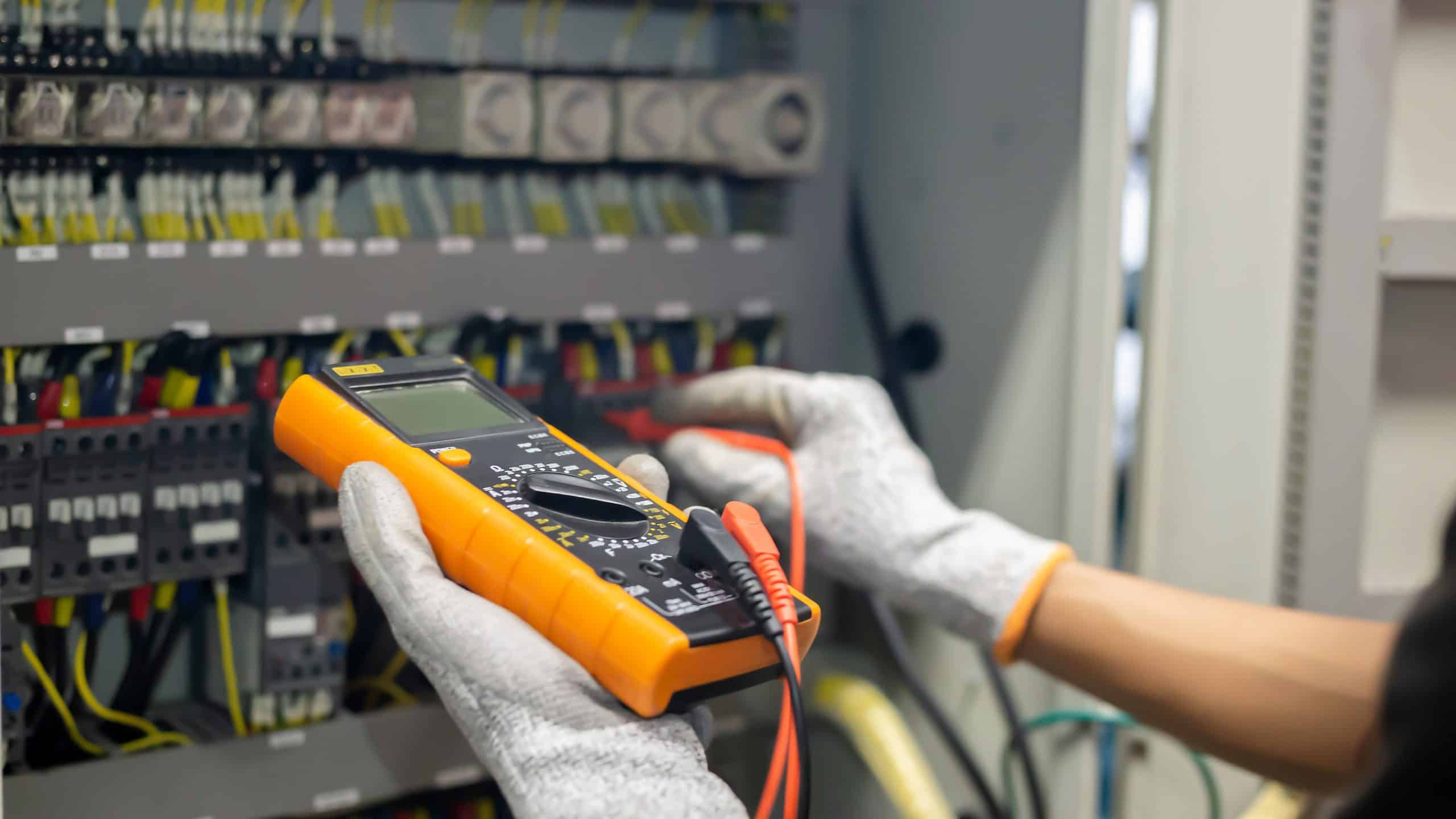
In homes, you should test RCDs monthly to ensure they are functioning correctly. using the built-in test button. In workplaces, AS/NZS 3760 requires testing every three months, and more rigorous inspection through injection testing at least annually.
For business or commercial settings, you should:
- Maintain detailed test records to meet WHS and insurance requirements
- Include RCDs in broader preventative maintenance strategies
- Schedule regular switchboard health checks, including thermal imaging
“We’ve helped dozens of Brisbane businesses stay compliant and reduce downtime through smart, scheduled maintenance – RCDs are just one part of our broader electrical safety strategy,” says Peter, Senior Electrician at Gimpel Electrics.
Investing in regular RCD testing also protects your assets and staff from the often-hidden dangers of outdated electrical systems.
Selecting the right RCD for your site
Not all RCDs are the same. Selecting the right model depends on the location, load type, and risk factors.
Options include:
- Fixed RCDs – permanently installed in switchboards
- Portable RCDs – ideal for temporary work or tool use on job sites
- Socket-outlet RCDs – built into wall sockets for high-risk areas
Commercial sites may also require:
- Three-phase compatibility
- Proper selectivity between upstream and downstream devices
- Compatibility with solar, battery systems and EV chargers
Gimpel Electrics provides expert guidance on selecting the most appropriate RCDs for your business or home, ensuring both safety and energy system performance are considered.
Energy efficiency and RCDs – an added bonus
Safe electrical systems are more efficient. When your circuits are protected and compliant, you’re well-positioned to take advantage of:
- LED lighting upgrades
- Solar power systems
- Battery storage
- Power factor correction for industrial machinery
RCDs form the foundation of a modern, integrated electrical setup – one that protects your people and supports long-term cost savings. And at Gimpel Electrics, safety and efficiency always go hand in hand.
Why partner with Gimpel Electrics
Gimpel has been protecting Queensland homes and businesses for over 30 years. We’re not a discount operator – our clients choose us for:
- World-class service and dependable support
- Fast call-outs across Brisbane and the Southside
- Deep expertise in both commercial and domestic systems
- Bundled safety and energy audits for long-term peace of mind
Our loyal client base – some with us for over three decades – is a testament to our commitment to quality and safety.
Conclusion
RCDs are essential for any safe, compliant and energy-efficient electrical system – whether you’re managing a school, a commercial site or your own home. From protection against electrical fires to minimising the risk of electric shock from faulty electrical appliances, they’re a frontline safety solution.